

Parents can find a pediatric dentist in Herndon, VA, for anxious children at Tooth Doc Family Dentistry, where Dr. Imaney Ahmad uses a gentle, conservative approach to build trust. This guide covers behavior management techniques, the first visit experience, and how to prepare your child for a stress-free dental journey.
Behavior Management Techniques
Behavior management is the clinical and psychological strategy used by dentists to help patients cooperate during treatment. For anxious children, this is not about forcing compliance but about creating a predictable and safe environment. At Tooth Doc Family Dentistry, the team utilizes a specific methodology to reduce fear and build confidence in young patients.
The Tell, Show, Do Approach
The "tell, show, do" technique is a standard of care in pediatric dentistry. Dr. Ahmad explains what she is about to do, shows the instrument to the child, and then performs the action slowly. This predictability removes the element of surprise, which is a primary driver of dental anxiety in children. By seeing the tool before it touches their mouth, the child gains a sense of control over the situation.
Positive Reinforcement and Distraction
Positive reinforcement is a behavior modification technique that rewards desired behaviors with praise or small incentives. The team at Tooth Doc uses verbal praise and, in some cases, small prizes to celebrate a child's cooperation. Distraction techniques, such as providing sensory toys or playing calming music, also help shift the child's focus away from the procedure. This multi-sensory approach ensures that the child remains calm and engaged throughout the appointment.
The First Visit Experience
The first dental visit sets the tone for a child's entire relationship with oral healthcare. A positive initial experience can last a lifetime, while a negative one can create long-term phobias. Tooth Doc Family Dentistry is designed to make this first interaction as gentle and unthreatening as possible.
What to Expect in the Chair
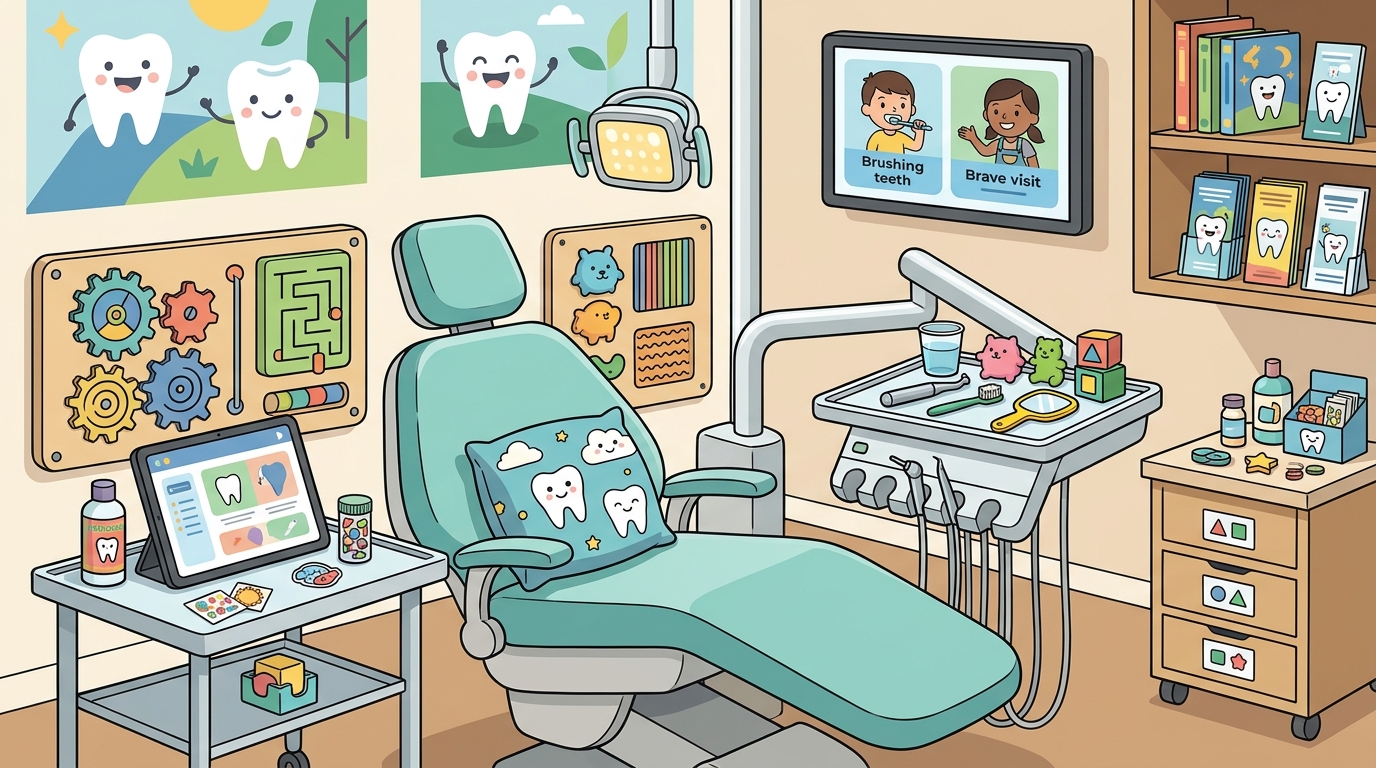
For very young children, the first visit is often a "happy visit" that involves a gentle exam and a conversation with the parent. There is no drilling or invasive work. The dentist counts the teeth, checks for any obvious issues, and lets the child sit in the chair to get comfortable. This low-pressure introduction helps the child associate the dental office with a safe space rather than a place of pain.
Building Trust with the Team
Trust is built through consistent, kind interactions. The staff at Tooth Doc, including patient coordinators and dental assistants, are trained to be welcoming and patient. They take the time to answer questions and ensure the child feels valued. This human connection is often more important than the clinical equipment in determining whether a child will return willingly.
Preparing Your Child at Home
Preparation is a critical component of managing dental anxiety. How parents talk about the dentist at home directly influences how a child feels when they arrive at the office. Simple changes in language and routine can make a significant difference.
Language and Framing
Parents should avoid using negative words like "pain," "shot," or "drill" when discussing dental visits. Instead, use neutral or positive terms such as "check-up," "cleaning," or "counting teeth." Framing the visit as a routine health check, similar to a doctor's visit, helps normalize the experience. If a child asks about a specific procedure, provide a simple, honest explanation without exaggerating the discomfort.
Role-Playing and Routine
Role-playing at home can be an effective way to desensitize a child to dental tools. Using a toy toothbrush or a mirror, parents can practice "counting teeth" or "cleaning