

Fluide and Sealant Schedules for Anxious Kids
For most children, fluoride varnish is applied every six months, while dental sealants are placed once on newly erupted molars. This guide explains how to adjust these schedules based on cavity risk and anxiety levels. We cover the clinical evidence for frequency, how to assess risk, and practical techniques to keep children calm during preventive care. according to Fluoride Treatments Sealants
Fluoride Varnish Frequency
Fluoride varnish is a highly concentrated topical fluoride application that hardens on the tooth surface. It is the most effective method for delivering fluoride to children because it requires minimal cooperation and stays on the teeth for hours. The standard recommendation for most children is application every six months, coinciding with routine dental exams and cleanings.
Standard vs. High-Risk Schedules
For children with average cavity risk, a six-month interval is sufficient to maintain enamel strength. However, the frequency changes significantly when a child is classified as high-risk. The American Dental Association and the American Academy of Pediatric Dentistry recommend that high-risk children receive fluoride varnish every three months. This quarterly schedule ensures a constant supply of fluoride ions to the enamel, which helps remineralize early decay before it becomes a cavity.
At Tooth Doc Family Dentistry, we tailor the fluoride schedule to the individual child. If your child has a history of cavities or enamel defects, we may move to a three-month cycle. This approach is less invasive than drilling and filling, which is a major benefit for anxious patients. Frequent, short visits for varnish application can build trust without the stress of complex procedures.
Why Varnish Works for Anxious Children
Fluoride varnish is a quick procedure that often takes less than a minute. It does not require water spray, suction, or drilling. For a child who is afraid of the sound of the drill or the sensation of water in their mouth, varnish is a low-stress intervention. The taste is often described as minty or fruity, which can be a positive sensory experience. Because it is painless and fast, it serves as an excellent tool for desensitization. Children who start with just varnish applications often become comfortable enough to tolerate cleanings and eventually sealants.
Cavity Risk Assessment
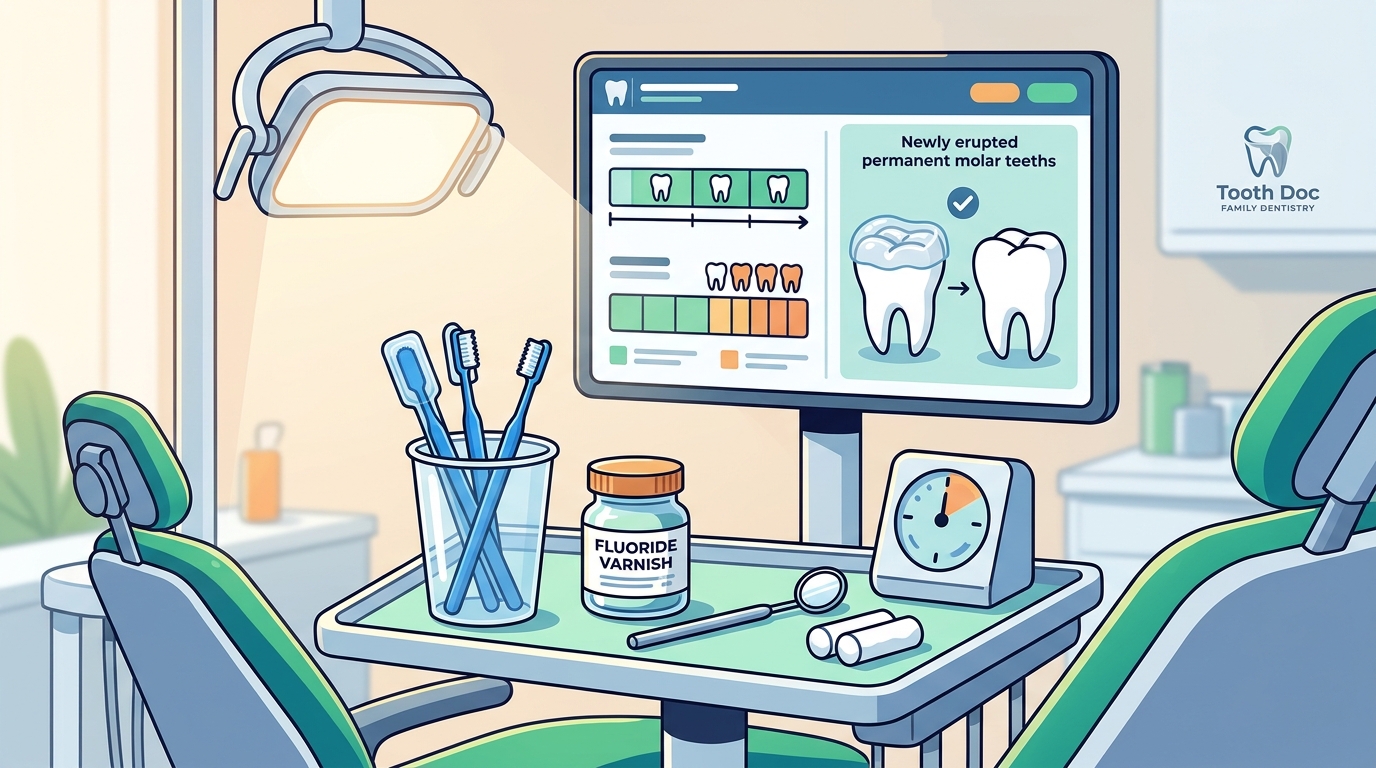
Cavity risk assessment is a systematic process used by dentists to determine the likelihood of a patient developing new cavities. It moves beyond simply counting existing cavities and looks at the whole picture. Understanding your child's risk level is the first step in creating an effective prevention plan. It dictates how often they need fluoride and whether they are a candidate for sealants.
Factors That Increase Risk
Several factors contribute to a high cavity risk profile. These include a history of cavities in the last three years, the presence of active decay, and the use of frequent sugary snacks or drinks. Other factors include the use of certain medications that cause dry mouth, the presence of enamel defects, and the difficulty of cleaning teeth at home. Children who wear braces or have crowded teeth may also be at higher risk because plaque is harder to remove from those areas.
Factors That Lower Risk
Conversely, certain factors lower the risk of decay. These include a history of no cavities, good oral hygiene habits at home, and a diet low in fermentable carbohydrates. The use of fluoride toothpaste and water fluoridation also play a role. If your child has a low-risk profile, they may only need fluoride varnish every six months and may not need sealants if their molars are intact and cleanable.
At our Herndon office, we use a comprehensive risk assessment during every exam. We look at the condition of the teeth, the gums, and the child's home care habits. This assessment helps us decide if a child needs a more aggressive prevention strategy. It also helps us communicate clearly with parents about why certain treatments are recommended. Transparency in risk assessment helps reduce anxiety by making the care plan logical and understandable.
Anxiety Management Techniques
Dental anxiety is a common issue in pediatric dentistry. It can prevent children from receiving necessary preventive care. Managing this anxiety is not just about comfort; it is about ensuring that the child receives the fluoride and sealants they need. There are several evidence-based techniques that dentists use to help anxious children feel safe and in control.
Behavioral Techniques
One of the most effective techniques is the "tell, show, do" method. The dentist explains what they are going to do, shows the instrument, and then performs the action slowly. This predictability reduces fear of the unknown. Another technique is positive reinforcement. Praising the child for good behavior, such as keeping their mouth open or staying still, encourages cooperation. Sticker charts and small rewards can be very effective for younger children. These techniques are non-invasive and can be used in every visit.
Environmental and Communication Strategies
The environment of the dental office also plays a role in anxiety management. A calm, friendly atmosphere with minimal noise can help children relax. Dentists often use distraction techniques, such as playing music or showing cartoons on a ceiling-mounted screen. Communication is key. Dentists should speak in a calm, reassuring tone and avoid using scary words like "drill" or "shot." Instead, they use terms like "tooth brush" or "sleepy juice." At Tooth Doc Family Dentistry, we prioritize gentle communication and a welcoming environment to help anxious patients feel at ease.
When to Consider Sedation
For children with severe anxiety or a history of traumatic dental experiences, behavioral techniques may not be enough. In these cases, sedation dentistry may be considered. Sedation can range from nitrous oxide (laughing gas) to oral sedation or general anesthesia. The choice of sedation depends on the child's level of anxiety and the complexity of the treatment. It is important to discuss sedation options with your dentist to determine what is safe and appropriate for your child. Sedation can make it possible to complete multiple treatments in one visit, reducing the number of stressful appointments.
Comparison of Preventive Care Options
| Procedure | Frequency | Best For | Anxiety Level |
|---|---|---|---|
| Fluoride Varnish | Every 3-6 months | All children, especially high-risk | Low |
| Dental Sealants | Once per molar | Children with deep grooves in molars | Medium |
| Professional Cleaning | Every 6 months | All children | Medium |
| Oral Exam | Every 6 months | All children | Low |
Key Takeaways
- Fluoride varnish is the most effective preventive treatment for children and is typically applied every six months.
- High-risk children should receive fluoride varnish every three months to maximize cavity prevention.
- Dental sealants are applied once to newly erupted molars and can last for several years.
- Cavity risk assessment is essential for determining the appropriate frequency of preventive care.
- Behavioral techniques like "tell, show, do" and positive reinforcement are effective for managing dental anxiety.
- A calm, friendly dental environment helps reduce anxiety and build trust.
- Sedation dentistry is an option for children with severe anxiety or a history of trauma.
- Regular dental visits are crucial for monitoring cavity risk and adjusting the prevention plan.
Frequently Asked Questions
How often should my child get fluoride varnish?
Most children should receive fluoride varnish every six months. However, children with a high risk of cavities may need it every three months. Your dentist will determine the best schedule based on your child's individual risk profile. according to Oral Health Resources
Are dental sealants painful?
No, dental sealants are not painful. The procedure involves cleaning the tooth, applying a special gel, and then painting the sealant onto the tooth. No drilling or injections are required. Most children do not feel anything during the process.
How long do dental sealants last?
Dental sealants can last for several years, often up to 10 years. They should be checked during regular dental exams to ensure they are still intact. If a sealant chips or wears away, it can be reapplied.
What if my child is too anxious to sit in the dental chair?
If your child is too anxious to sit in the chair, your dentist may recommend sedation dentistry. This can help your child relax and make the visit more comfortable. It is important to discuss this option with your dentist before the appointment.
Do sealants prevent all cavities?
Sealants are highly effective at preventing cavities in the grooves of molars, but they do not prevent all cavities. Cavities can still form on the smooth surfaces of teeth. Good oral hygiene and fluoride use are still necessary to prevent decay in other areas.
Can fluoride varnish be used on adults?
Yes, fluoride varnish can be used on adults as well. It is particularly beneficial for adults with a high risk of cavities or those who have dry mouth. The frequency of application is similar to that for children, depending on risk level.
What is the best way to reduce my child's dental anxiety?
The best way to reduce dental anxiety is to start dental visits early, use positive reinforcement, and choose a dentist who specializes in pediatric care. A gentle, patient dentist can make a significant difference in a child's experience.
Conclusion
Preventing cavities in anxious children requires a tailored approach that balances clinical effectiveness with comfort. By understanding the recommended frequencies for fluoride varnish and sealants, and by using effective anxiety management techniques, parents can help their children maintain healthy smiles. At Tooth Doc Family Dentistry, we are committed to providing gentle, comprehensive care for families in Herndon, VA. We take the time to assess each child's risk and anxiety level, ensuring that they receive the right preventive care in a supportive environment. If you have questions about your child's dental health, please to schedule an appointment.